

Making your thinking and your value visible when you work in a second language
You are in a meeting, and you know the answer. You’ve done the analysis, checked it twice, and even planned the next steps. You share your idea, carefully and politely, in English. A few people nod, and the conversation moves on.
A few minutes later, a colleague says almost the same thing, clearly and confidently. Suddenly it’s a great idea. Everyone loves it, and someone else takes charge of the plan. It isn’t you.
I know this scene, and English is my first language.
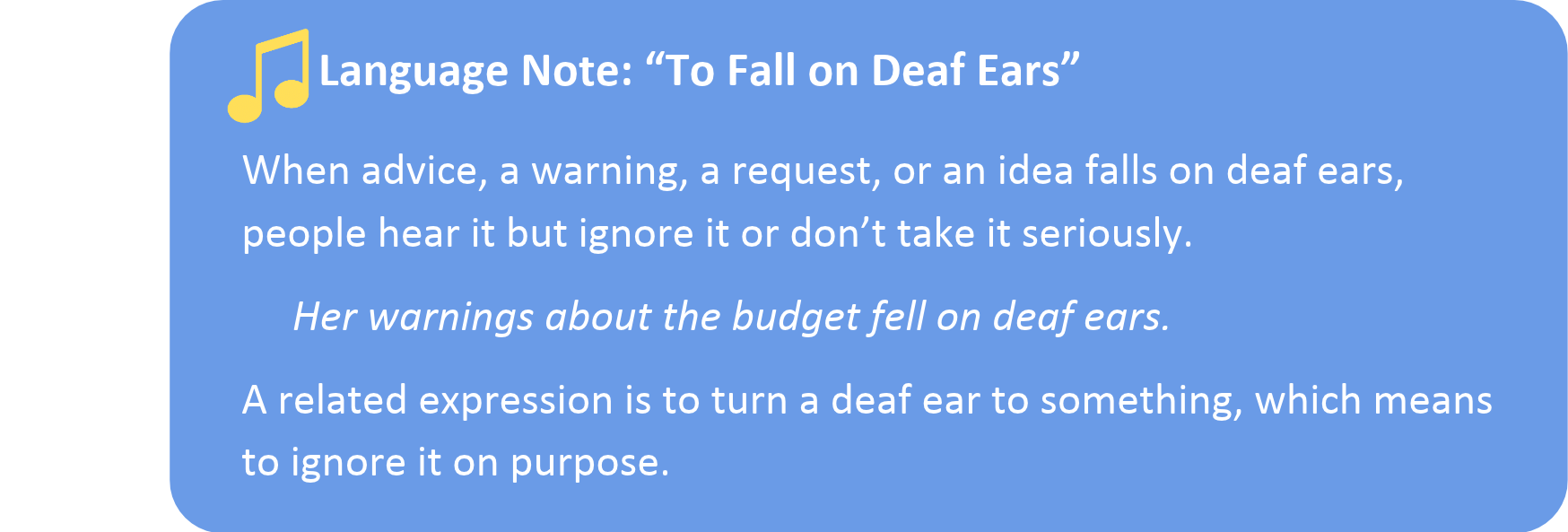
Earlier in my career, I offered ideas that fell on deaf ears. The ideas were fine. My work was respected. What was missing was how I said it. How do I know? Because a few minutes later, someone who did know how to present the same idea did, and it was applauded.
Nobody told me why I wasn’t being heard, and I didn’t see it myself. I just felt invisible. The direct result was that someone else was given responsibility for putting the plan into action, and I was given a supporting role and zero credit.
That was my lesson: in English-speaking workplaces, good thinking doesn’t always speak for itself. People often decide what an idea is worth from the way it is delivered, and from how clearly they can see why it matters.
Now imagine doing this in your second language.
on international business meetings found that native speakers don’t actually talk much more than everyone else. But a much larger share of the non-native speakers stayed silent, even though their English worked well in those same meetings. In a study of a global company, how fluent people believed they were influenced their behaviour more than how fluent they actually were. Some spoke up, some stayed quiet, and some decided to improve. And research on employee “voice” shows that employees and their managers often disagree about how much the employee speaks up, a difference that affects what happens to the employee at work.
So what does “invisible” look like in practice? You wait to be asked instead of offering your view. You describe what you did (“I ran the tests”) without saying why it matters to the project, the clinic, or the budget.
Under-describing your achievements can also be part of the problem. Sometimes it comes from language: it is hard to talk about your work with confidence when you are not sure you have the right words. Small words like “just” and “only” make your results sound smaller: “I just did a quick analysis.” But culture plays a part too. In some cultures, talking about your own success feels impolite, and waiting to be invited feels respectful. This was true for me as well. I had to learn to speak up myself, instead of waiting for a senior person to ask for my opinion.
None of this is a grammar problem. Your grammar can be excellent and your value can still be invisible. Colleagues can’t appreciate what they can’t see, and most of them are too busy to look for it.
Here is a small test. If a colleague had to explain your contribution to someone who wasn’t in the room, would they get it right? Would they know what you did and why it was important?
If you hesitated, that is the gap we work on at Intuitive English. I can help you explain your ideas so clearly that others understand them and see their value.
____________________________________
Sources
Burris, E. R., Detert, J. R., & Romney, A. C. (2013). Speaking up vs. being heard: The disagreement around and outcomes of employee voice. Organization Science, 24(1), 22–38. https://doi.org/10.1287/orsc.1110.0732
Lev-Ari, S., & Keysar, B. (2010). Why don’t we believe non-native speakers? The influence of accent on credibility. Journal of Experimental Social Psychology, 46(6), 1093–1096. https://doi.org/10.1016/j.jesp.2010.05.025
Neeley, T. B. (2013). Language matters: Status loss and achieved status distinctions in global organizations. Organization Science, 24(2), 476–497. https://doi.org/10.1287/orsc.1120.0739
Neeley, T. B., Hinds, P. J., & Cramton, C. D. (2012). The (un)hidden turmoil of language in global collaboration. Organizational Dynamics, 41(3), 236–244. https://doi.org/10.1016/j.orgdyn.2012.03.008
Rogerson-Revell, P. (2008). Participation and performance in international business meetings. English for Specific Purposes, 27(3), 338–360.Dang, T.N.Y., High-frequency words in academic spoken English: corpora and learners, ELT Journal, Volume 74, Issue 2, April 2020, Pages 146–155, https://doi.org/10.1093/elt/ccz057