
Have you ever gotten home, completely exhausted, and found yourself wanting nothing more than to have dinner, watch some mindless TV or videos, and go to bed? Or have you ever pressed ahead and tried to study English after such a long day at work — only to find your mind foggy and your motivation running on empty?
I know exactly where you’re coming from. I’ve been there myself — so many times. I’ve often set aside my Italian or Mandarin studies (or other items on my never-ending to-do list!) because I felt drained from a tough day or from the constant mental juggling of language and cultural code-switching.
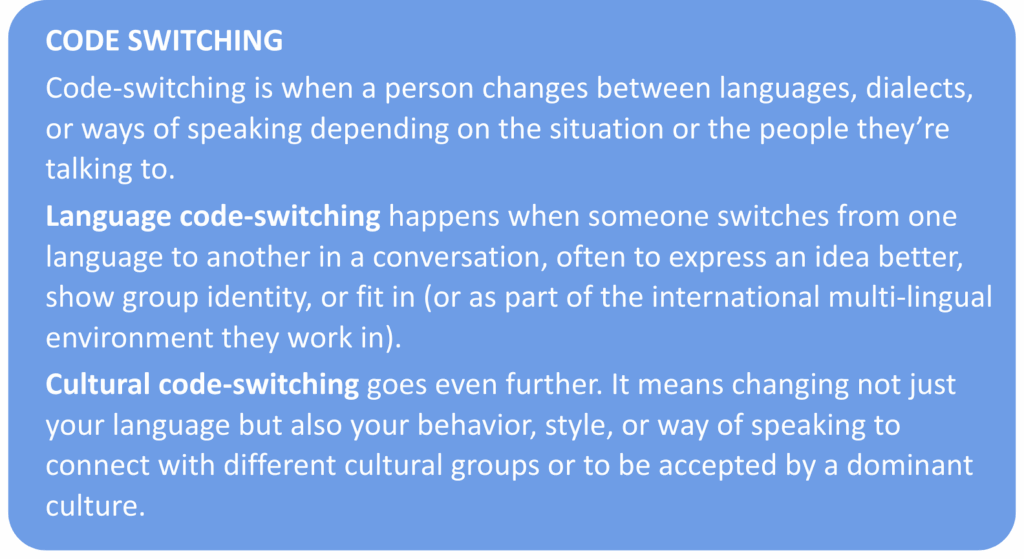
As professionals juggling meetings, decisions, and constant mental switching, your brain is working overtime. And when your brain is tired, doing anything meaningful — especially something as cognitively demanding as language learning — can feel like trying to swim upstream.
The Good News
Improving your English isn’t always about studying harder or cramming more vocabulary. Sometimes, the most powerful thing you can do is… pause.
I came across these ten tips recently, but I wanted to dig into the science behind them myself. As I explored, I realized how valuable they could be — not just for busy professionals like you, but also for my own clients.
This post isn’t just about boosting productivity for language learning. It’s about helping you feel clearer, calmer, and more capable. These tips will help you connect with English more naturally and confidently — and, just as importantly, support your personal and professional well-being.
(That’s the beauty of learning English with the Intuitive Method: you’re learning interesting, relevant things while ALSO becoming more confident and fluent in English. Double win!)
Why These Tips Work
The following ten small practices are backed by research in neuroscience and psychology. They’re designed to reset your brain, improve focus, and make learning smoother. And yes, they work even when your schedule is packed.
(In fact, I’d argue they work especially when your schedule is packed! J )
1. Step Outside for Five Minutes
Just a few minutes of natural light helps your brain wake up, improves your alertness, and even boosts your mood. Whether it’s a balcony, a garden, or just standing by the window, this micro-break can help you return to your English with fresh energy.
Why it works: Sunlight resets your internal clock and boosts serotonin — a brain chemical linked to focus and well-being.
2. Drink a Glass of Water (Slowly)
It sounds too simple — but even mild dehydration affects memory, attention, and your ability to concentrate. Sip slowly and mindfully. It’s a reset for your brain and your body.
Why it works: Your brain is about 75% water — and it needs hydration to function at its best.
3. Take Three Deep Belly Breaths
This small breathing shift calms your nervous system, reduces anxiety, and brings more oxygen to your brain. Try it before a meeting, email, or language exchange.
Why it works: Deep breathing activates areas of the brain linked to focus and emotional control.
4. Close Your Eyes for Two Minutes
No phone. No music. Just stillness. This short rest gives your visual system a break — and your mind a chance to reset.
Why it works: Micro-pauses reduce cognitive fatigue and enhance attention.
5. Stretch Your Neck and Spine
Especially if you’ve been sitting, gentle stretching helps release tension that blocks your mental energy. Just a few movements can improve blood flow — and your mindset.
Why it works: Physical movement wakes up your nervous system and refreshes your focus.
6. Doodle or Write for Fun
Take 60 seconds to draw, scribble, or jot down a few words — even random ones in English. This creative break can bring surprising clarity.
Why it works: Using your hands while thinking helps activate memory and creativity centers in the brain.
7. Listen to Soothing Sounds
Calm music, nature sounds, soft rhythms — all help reduce mental overstimulation. Try it before or during your English practice for deeper focus.
Why it works: Sound affects emotion and attention. Calm input = better learning.
8. Eat Something Mindfully (No Screens Allowed!)
Eat a snack, slowly, without distractions. Notice the texture, smell, and taste. This moment of mindfulness helps reset your attention and energy.
Why it works: Sensory attention restores mental clarity and supports brain-body connection.
9. Do a Brain Dump
Take a moment to write down what’s on your mind — your to-do list, your worries, or ideas. Clear your mental “desktop” before studying.
Why it works: Free writing reduces stress and opens space in your working memory.
10. Do Nothing for Three Minutes
Yes — nothing. Just sit. Don’t meditate. Don’t plan. Let your mind wander. These quiet moments are powerful for memory and integration.
Why it works: Rest allows the brain to process and store what you’ve learned.
The Bigger Picture: Learning Through Feeling
If you’re an intermediate English learner, you probably already know what to study. But the real shift comes when you start asking:
- What does my brain need to feel ready to learn?
- What kind of content makes me want to engage?
As a language coach, I’ve seen the power of relevant, real-world, and emotionally engaging content. When your brain is interested and emotionally connected, it learns faster, without forcing. So yes, these small resets help. But what truly accelerates your English is when you combine them with natural, human-centered input the kind you care about, the kind you feel.
That’s the foundation of my method.
That’s the key to sustainable, confident communication.
Below you’ll find a list of the original research studies and sources I used — great if you enjoy diving into the science (though the English is a bit more advanced!).
Do you want help to create an effective, structured program to help you gain fluency and confidence in speaking or presenting in English?
Book a free discovery call with me HERE and let’s get started!
___________________________________________________________
SOURCES & ADDITIONAL (Advanced) READING
Step outside for 5 mins (Natural light and alertness)
- Harvard Health Publishing – Blue light has a dark side
https://www.health.harvard.edu/staying-healthy/blue-light-has-a-dark-side - Sleep Foundation – How Light Affects Sleep
https://www.sleepfoundation.org/bedroom-environment/how-light-affects-sleep
Drink a glass of water slowly (Hydration and brain function)
- Journal of Nutrition – Mild dehydration affects mood in healthy young women
https://academic.oup.com/jn/article/142/2/382/4630786 - Harvard Health Publishing – Water: How much should you drink every day?
https://www.health.harvard.edu/staying-healthy/how-much-water-should-you-drink
Take 3 deep belly breaths (Breathing and mental clarity)
- Frontiers in Human Neuroscience – The effect of diaphragmatic breathing on attention, negative affect and stress in healthy adults
https://www.frontiersin.org/articles/10.3389/fnhum.2017.00529/full - Harvard Health Publishing – Relaxation techniques: Breath control helps quell errant stress response
https://www.health.harvard.edu/mind-and-mood/relaxation-techniques-breath-control-helps-quell-errant-stress-response
Close your eyes for 2 mins (Micro-breaks and focus)
- Stanford Medicine – The science of taking breaks
https://scopeblog.stanford.edu/2021/02/23/the-science-of-taking-breaks/ - Psychology Today – Why Your Brain Needs More Downtime
https://www.psychologytoday.com/us/blog/the-athletes-way/201307/why-your-brain-needs-more-downtime
Stretch your spine and neck (Stretching and alertness)
- American Council on Exercise – The Benefits of Stretching
https://www.acefitness.org/education-and-resources/lifestyle/blog/6590/the-benefits-of-stretching/ - Harvard Health Publishing – The importance of stretching
https://www.health.harvard.edu/staying-healthy/the-importance-of-stretching
Doodle, scribble, or write randomly (Doodling and cognitive performance)
- Applied Cognitive Psychology – Doodling helps memory
https://onlinelibrary.wiley.com/doi/abs/10.1002/acp.1561 - BBC – Why doodling is good for you
https://www.bbc.com/worklife/article/20170906-why-doodling-is-good-for-you
Listen to calm sounds (Music, sound, and concentration)
- British Journal of Psychology – Music and cognitive performance
https://bpspsychub.onlinelibrary.wiley.com/doi/10.1111/bjop.12021 - Verywell Mind – How Music Can Improve Your Mood
https://www.verywellmind.com/surprising-psychological-benefits-of-music-4126866
Eat something with zero screens around (Mindful eating and brain reset)
- Harvard Health Publishing – Mindful eating
https://www.health.harvard.edu/staying-healthy/mindful-eating - Mindful.org – What is mindful eating?
https://www.mindful.org/mindful-eating-infographic/
Do a brain dump on paper (Writing and mental clarity)
- Psychological Science – Writing about worries boosts exam performance
https://journals.sagepub.com/doi/10.1177/0956797610386802 - Harvard Business Review – Clearing the mental clutter
https://hbr.org/2016/12/clearing-the-mental-clutter
Do absolutely nothing for 3 minutes (Rest and memory consolidation)
- Trends in Cognitive Sciences – The importance of rest for memory consolidation
https://www.sciencedirect.com/science/article/pii/S1364661312000953 - Scientific American – Why your brain needs more downtime
https://www.scientificamerican.com/article/mental-downtime/