

Want to speak better English? Present with more confidence?
Then the next step may just be getting feedback.
We’ve already looked at how listening and reading (input) helps you notice the language, and how deliberate practice in speaking and writing (output) helps you improve one small skill at a time.
But if you don’t get feedback, you might be practicing the wrong way, and repeating mistakes.
That’s why feedback is always a key part of the improvement process.
What Is Feedback (in Language Learning)?
Feedback is when someone corrects your English or helps you improve it.
It can be:
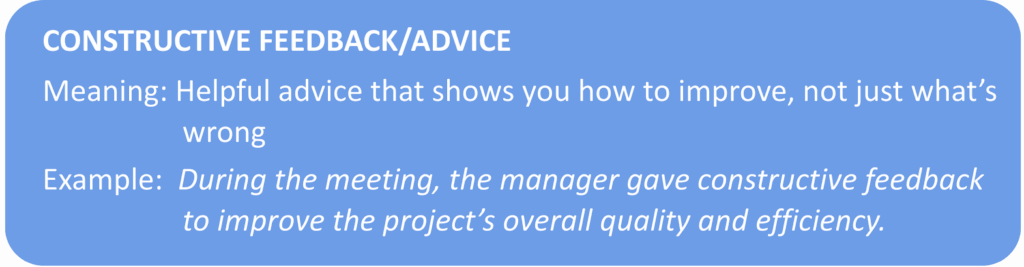
- A teacher pointing out grammar mistakes;
- A coach helping you adjust your tone or style;
- A colleague helping you rephrase an email; or
- A video recording you listen to and analyze yourself.
Feedback tells you:
- What you did well;
- What needs to change; and
- How to improve.
Without feedback, it’s like practicing ballet alone in your living room, and never knowing if your movements are right.
Why Feedback Matters
Feedback helps to:
- Stop bad habits from forming (or continuing!);
- Build confidence because you know what to work on;
- Save time — no more guessing what’s wrong; and
- Make your learning more focused and efficient.
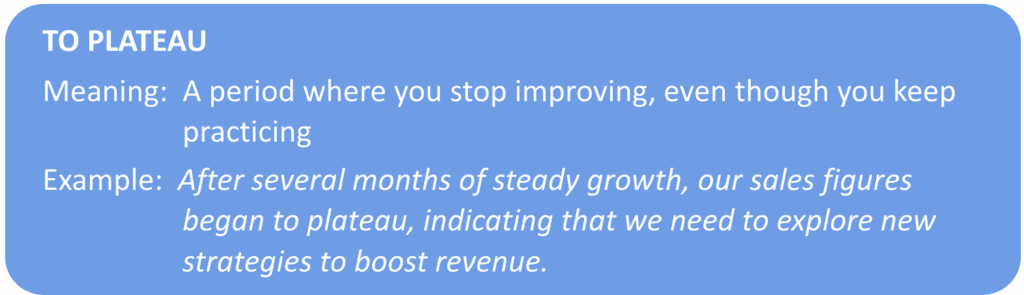
Many intermediate learners hit a “plateau”: they stop improving even though they are working hard.
Often, it’s because they are not getting feedback.
The Theater Analogy
Think about ballet dancers, opera singers, or actors on big stages like the Paris Garnier (Paris Opera House). When they are first assigned a new role in a performance, they may look at past performances to see how others handled the role they are playing (the SEE). They then practice alone – learning lines, steps, etc. (the DO).
Do they rehearse alone?
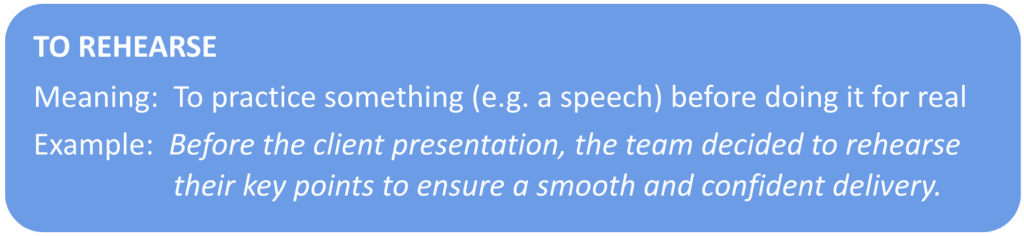
Of course not. They come together and have:
- A director to guide the scene;
- A choreographer to correct each movement; and
- A coach or vocal trainer to shape delivery and voice.
These performers are talented, but talent isn’t enough.
They grow by getting feedback from experts in real time, again and again.
It’s the same with English.
Examples of Feedback That Help You Grow
Here are ways to get meaningful feedback in your English learning:
Record & Review
Record yourself reading or speaking.
Listen to your own tone, speed, and pronunciation.
Ask: Does this sound natural? Clear?
Ask for Feedback
Share your writing or presentations with someone who can give useful comments (coach, teacher, colleague).
Ask: “How can I say this more clearly?” or “Does this sound professional?”
Work with a Language Partner
Practice short dialogues or tasks, then reflect together.
Ask: “What sounded natural? What didn’t?”
Use AI — But Carefully
Language apps can catch grammar or spelling errors, but they can’t always explain why something doesn’t sound right, or how to improve your tone or structure for a real-world business setting.
How to Receive Feedback Well
Feedback only helps if you’re open to it. Here’s how to make the most of it:
- Don’t take it personally: it’s about the language, not about you;
- Ask for clarification if something isn’t clear;
- Take notes and try again: don’t just listen, apply it; and
- Look for patterns: if multiple people correct the same thing, focus on that.
So What’s Your Next Step?
This week, ask for feedback on one thing:
- A presentation;
- An email;
- Your pronunciation; or
- A voice message.
Even just one small correction can lead to a big improvement.
Because you don’t need more English.
You need clear, helpful feedback to use what you already know — better.
Do you want feedback from a professional communications coach?
Book a free discovery call with me HERE and let’s get started!
___________________________________________________________