

We often think that learning requires discipline and hard work rather than fun or enjoyment. a language needs to be hard work to be effective. Certainly as children, do one ever asked us (at least not when I went to school) whether we were having fun. Similarly, as adults, we feel that learning a language, and becoming good at it, needs diligence and effort to be effective. And yes, of course, consistency, challenge, and focused practice are important.
But what if I told you that one of the biggest drivers of progress isn’t how much time you spend drilling and memorizing, but how much you enjoy the language learning process?
It’s Not about Playing Games (Though That’s Fine Too)
Let’s be clear: I’m not talking about turning everything into a game or chasing dopamine hits through flashy apps. I am not talking about game-based learning, edutainment, or gamification.
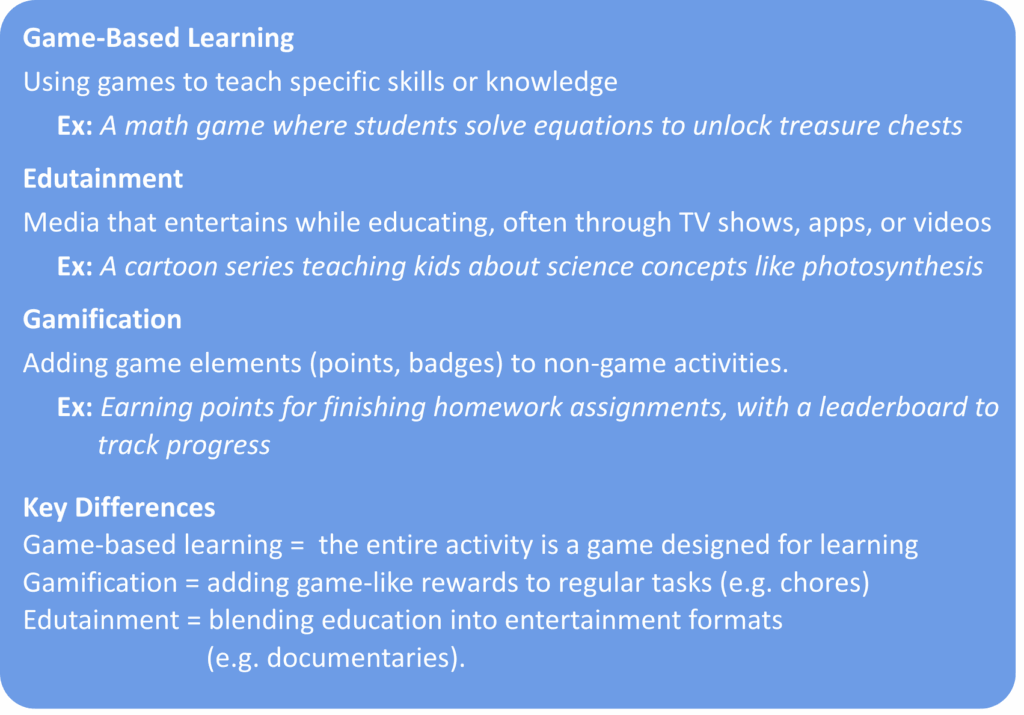
There is certainly nothing wrong with using an app to practice vocabulary or grammar. For some learning styles and generations (e.g. Gen Z) it can be a very useful tool. But if you feel pressure to hit daily streaks or beat your last score, you might be feeding the algorithm more than you’re feeding your learning.
Enjoyable learning goes deeper than that. It means learning in ways that interest you, challenge you, and connect with who you are. Today we know that effective learning is less about making learning “fun” all the time and more about making it meaningful and motivating.
Why?
Why Enjoyment Leads to Progress
Well, there are four reasons:
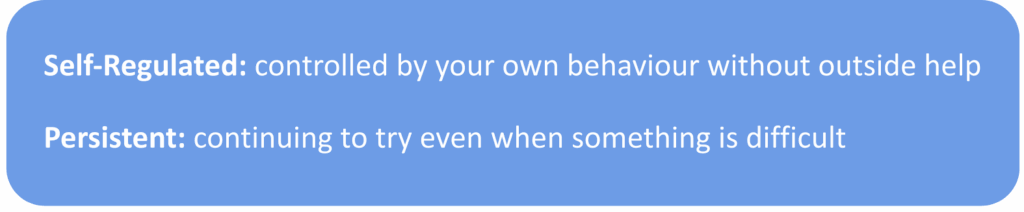
- Enjoyment increases motivation and consistency: research shows that when learning a foreign language, those who enjoy the process, are more self-regulated and persistent, even when things get tough. In addition it leads to much better learning outcomes.
- Enjoyment reduces anxiety: enjoying the content you’re working with creates a state of “relaxed alertness”. When your brain is relaxed, it learns more easily. This is especially relevant in language learning, where enjoyment reduces anxiety which leads to better skill development.
- Enjoyment supports deeper focus: the “flow state” (when you’re fully focused and engaged) is easier to enter when you enjoy what you’re doing. And that is when language starts to stick, when retention and fluency grows.
- Enjoyment enhances self-belief: when you’re engaged in a topic you love, you’re more likely to take risks, try out new words, and speak up, even if you make mistakes. I know this personally from a couple foreign language platforms I am on. When the topic of conversation is particularly interesting for me, for example, I am much more likely to want to speak about it – and to not be so concerned about how many mistakes I make as I talk!
Choose Content That Sparks Curiosity
So, some of the best advice I can give you to remain consistent and to progress, is to follow your interests. Whether it’s a podcast about your favourite industry, a YouTube video on your hobby, or an article on a topic you’ve always wanted to explore I urge you to find and use material that you find exciting and fascinating.
Because if you are interested, it has been shown that you are more likely to:
• Focus deeply;
• Practice longer;
• Repeat things voluntarily; and
• Feel good about your progress,
all of which add up to more effective learning — without the mental exhaustion.
This Is Why Coaching Matters
As a coach, one of my jobs is to help clients find and choose (or even for me to create) learning content that reflects their goals, industry, and/or passions. I love doing this, because when I go the extra mile, so do my clients. And the results are usually not just remarkable, but enjoyable.
That’s why I find that coaching can be so powerful: it’s not just about learning English.
It’s about learning in a way that connects with you.
But what if you are not ready to work with a coach?
How to Move Forward
If you are learning on your own and struggling to stay motivated, my recommendation is to ask yourself:
- Am I enjoying what I’m learning from?
- Am I curious about it?
- Am I excited to keep going?
If the answer is no, maybe it’s time to adjust your materials, and not your motivation.
Because enjoyment isn’t a luxury in learning.
It’s a strategy.
Do you want help to create an effective, structured program to help you gain fluency and confidence in speaking or presenting in English?
Book a free discovery call with me HERE and let’s get started!
___________________________________________________________
SOURCES
Dörnyei, Z. (2001). Motivational strategies in the language classroom. Cambridge University Press.
Csikszentmihalyi, M. (1990). Flow: The psychology of optimal experience. Harper & Row.
Deci, E. L., & Ryan, R. M. (1985). Intrinsic motivation and self-determination in human behavior. Springer Science & Business Media.
MacIntyre, P. D., & Gregersen, T. (2012). Emotions that facilitate language learning: The positive-broadening power of the imagination. Studies in Second Language Learning and Teaching, 2(2), 193-213.
Oxford, R. L. (1990). Language learning strategies: What every teacher should know. Newbury House Publishers.
Krashen, S. D. (1982). Principles and practice in second language acquisition. Pergamon Press.
Gardner, R. C. (1985). Social psychology and second language learning: The role of attitudes and motivation. Edward Arnold.
Dewaele, J. M., & MacIntyre, P. D. (2014). The two faces of Janus? Anxiety and enjoyment in the foreign language classroom. Studies in Second Language Learning and Teaching, 4(2), 237-274.