

Listening is important. Watching, reading, and noticing English is a great place to start.
But if you want to speak confidently, write clearly, or give presentations without stress , you need to do more than just watch or listen.
You need to practice.
But not just any practice.
You need deliberate practice.
What Is Deliberate Practice?
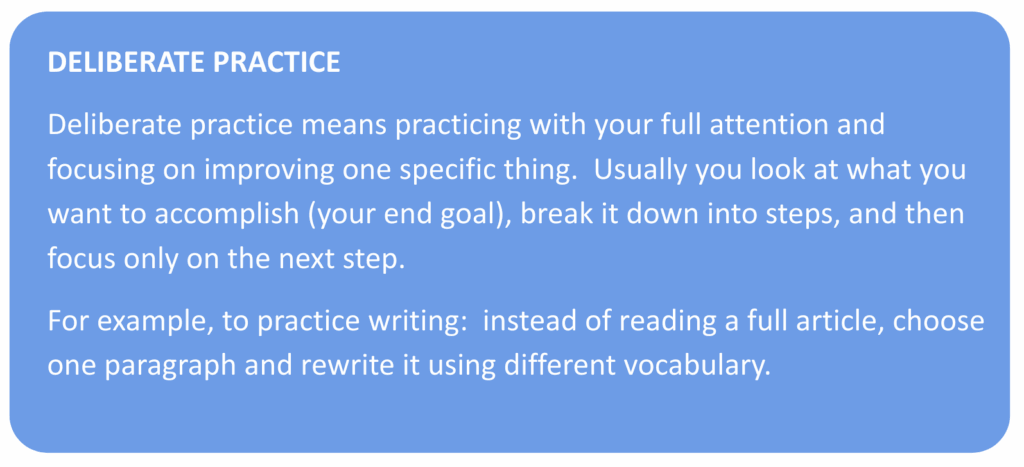
Deliberate practice means you are not just repeating something.
You are focusing on one small skill and trying to improve it with purpose.
Think of a pianist. They don’t just play the song again and again.
They slow down and focus on the hard part: one hand, one line, one movement, and they repeat it until it’s better.
That’s deliberate practice.
And it works for English too.
The 10,000-Hour Rule (And Why It’s Only Half True)
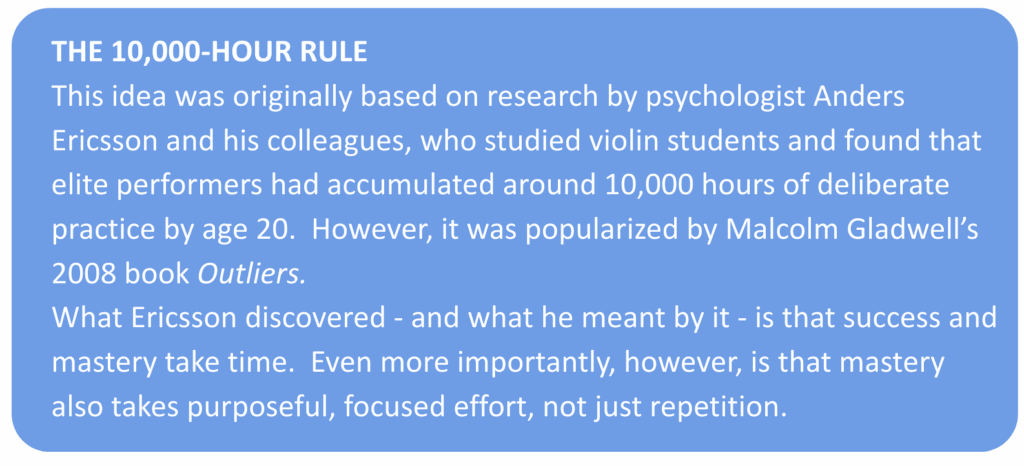
You may have heard of the “10,000-hour rule” made popular by Malcolm Gladwell:
To master any skill, you need 10,000 hours of practice.
But here’s the truth:
Hours alone don’t matter.
What matters is how you spend those hours.
If you practice with mistakes, you’ll just repeat those mistakes.
If you practice without feedback or focus, you may stay stuck.
So what do you do instead?
Examples of Deliberate Practice for English Learners
Here are ways busy professionals can use focused practice to make faster progress:
- Speaking practice: Choose one sentence and practice saying it clearly. Record yourself. Listen. Repeat until it sounds better.
- Pronunciation: Pick a difficult sound (like “th” or “v”) and practice it in 3–4 key words every day.
- Writing: Take one email you wrote. Try rewriting just one paragraph to sound more natural or professional. Focus on tone and structure.
- Presenting: Practice your presentation introduction until you feel confident. Don’t just run through the whole thing, zoom in on the hard parts.

This kind of short, focused practice builds fluency and confidence over time.
Why It’s Hard (and How to Make It Easier)
Deliberate practice is uncomfortable. It’s easier to just “do the easy stuff” like listening to a podcast and calling it a day.
But that won’t give you real growth.
Here’s how to make deliberate practice easier:
- Keep it short (10–15 minutes)
- Focus on one small thing
- Track progress (record yourself, compare writing, etc.)
- Get feedback from someone you trust (a coach, tutor, or colleague)
A Tip from the Glassblowers
If you’ve ever watched a glass artist, you’ll notice something important:
- they don’t rush.
- They turn the glass slowly.
- They repeat motions carefully.
- They adjust — and adjust again.
Each small movement matters.
That’s how you get something strong, beautiful, and clear.
And it’s the same with English.
So What’s Your Next Step?
This week, choose one skill.
Not ten. Not five. Just one.
Ask yourself:
- What part of English feels most difficult right now?
- What small step could I take to improve it?
Then take 10 minutes.
Focus.
And do it, on purpose.
Because fluency and confidence isn’t just about investing time.
It’s about how you use that time.
Ready to try it for yourself?
Download the free 7-Day Output Challenge Guide & Tracker — and start building better English through simple, consistent habits.
It’s quick to use, easy to follow, and designed to fit into your real (busy!) life.
You can get it right HERE!
___________________________________________________________